What Is Closed Cell Spray Foam?
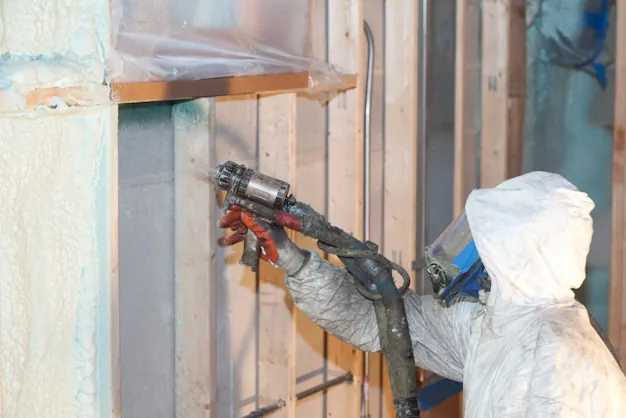
Spray foam is made by mixing two liquid components that expand and set as they're applied. In closed cell foam, the tiny bubbles — the "cells" — that form inside the material stay sealed. That makes it denser and more rigid than open cell foam, where the cells are broken open and the material feels softer and more sponge-like.
In practice, closed cell foam tends to feel hard to the touch, often with a smoother, more solid surface. It was sometimes chosen because it adds a degree of stiffness and behaves as a barrier to air and moisture. Those same qualities are what make it harder to remove, and what tend to attract a surveyor's attention.
You don't need to identify the foam yourself. We can usually tell from a visit, and clear photographs from the loft hatch can help us give an early view.
Open Cell vs Closed Cell Spray Foam
For a fuller explanation, including how to tell which type you have, see our open cell vs closed cell guide.
The table below summarises the general differences. Individual installations vary, and the condition of the roof underneath matters as much as the foam type. If your survey identifies open cell foam instead, open cell spray foam removal is usually the quicker job — see our general spray foam insulation removal page.
| Feature | Open cell foam | Closed cell foam |
|---|---|---|
| Feel | Soft and spongy; can be pressed in by hand | Hard and rigid with a firm surface |
| Density | Lighter | Denser |
| Moisture | Allows some vapour to pass through | Behaves more as a barrier to moisture |
| Bonding | Bonds to surfaces, often easier to cut away | Typically bonds very firmly to timber and felt |
| Removal | Often quicker, though still careful work | Usually slower and more labour-intensive |
| Typical survey concern | Mainly that timbers can't be inspected | Timbers can't be inspected, plus questions about trapped moisture |
Why Closed Cell Foam Is Harder to Remove
Because closed cell foam is rigid and strongly bonded, it rarely peels away. It has to be cut back and carefully scraped from rafters, purlins and roof coverings, and the work is physically demanding in a confined loft. Most of it is hand work with blades and scrapers, with power tools only where they’re safe; the craft is getting the foam off without scoring the rafters or splitting the felt.
Where foam has been sprayed directly onto the back of slates or tiles, or onto old felt that has become brittle, there's a greater chance the roof covering will be disturbed. We’ll talk you through this before starting and agree what happens if any repair is needed.
All of this means closed cell removal generally takes longer than a comparable open cell job, which is reflected in time on site and in the cost of removal.
When Closed Cell Removal Is Usually Needed
Closed cell foam is often mentioned specifically in surveys because it can limit a roof's ability to release moisture and makes the timbers difficult to inspect. Homeowners tend to look into removal when a buyer's survey or lender has raised it, when there are signs of damp or condensation, or when the roof needs repair and the foam is in the way. As with any spray foam, it's worth confirming exactly what's being asked before committing — but where a lender has said removal is required, closed cell foam is a frequent reason. Our page on spray foam mortgage problems explains how to approach that conversation.
What Affects a Closed Cell Removal Job
- How deep the foam is and how many square metres it covers
- What it's bonded to — timber, felt, a membrane or the tiles themselves
- The condition of the roof covering behind it
- Access into and around the loft, including hips and eaves
- Whether timber or roof repairs are likely once the foam is removed
- Re-insulation, ventilation and documentation requirements
Ballpark prices
Rigid foam usually pushes a job into the middle or top of the table, especially on big roofs or where it’s welded itself to old felt or tiles. A small patch can still be one of the cheaper jobs.
- Part of a roof (one slope, a patch or a small loft)£1,500–£3,000
- Whole loft in a typical 3-bed house£3,000–£5,000
- Big roofs, hard closed-cell foam or awkward access£5,000–£8,000 or more
- Rate per square metre of sprayed roofAbout £40–£80+ /m²
These are ballpark figures for Bristol roofs, not quotes. We fix the price once we’ve seen the foam, either on a visit or from good photos. Read how we price a job.
Closed Cell Foam in Bristol Homes
Closed cell foam turns up in all kinds of Bristol properties, from Victorian terraces in Easton and St George to interwar semis in Horfield and Brislington. In older roofs it was sometimes sprayed to hold slipped slates or tiles in place, which makes careful removal especially important: the foam may be doing a job the roof covering should be doing itself. Where that's the case, some roof repair is likely after removal, and we’ll flag the possibility at quote stage rather than after the event.
In tight terraced lofts in Totterdown, Bedminster or Ashley Down, closed cell removal can be particularly slow because there's limited room to work. Larger lofts in Henleaze or Cotham give more space, but often more roof area to clear.
The Removal Process
Assessment
Confirm the foam type, thickness and what it's bonded to.
Quote
Method, likely time on site and any risk to the roof covering, explained upfront.
Preparation
Clear the loft and protect the route through the house.
Removal
Cut and scrape the foam back, bag the waste and take it away.
Inspection
Look over exposed timbers and roof covering, with photos and notes as agreed.
Have open cell foam instead? See our general spray foam insulation removal page, or request a quote and we’ll confirm the type.
Official Guidance
- RICS consumer guide to spray foam insulation — background on spray foam types and why lenders and surveyors ask about them.
Links open in a new tab. We have no connection with these organisations.